The Egypt sea port list is more than just names on a map it’s the backbone of the country’s trade and a gateway connecting Africa, Asia, and Europe. With 15 major commercial ports and 29 specialized facilities, Egypt stands at the heart of global maritime routes. From Alexandria to Sokhna, each port plays a unique role in supporting imports, exports, and regional connectivity. In this guide, we’ll uncover key facts every trader must know to ship smarter.
How Many Sea Ports Does Egypt Have?
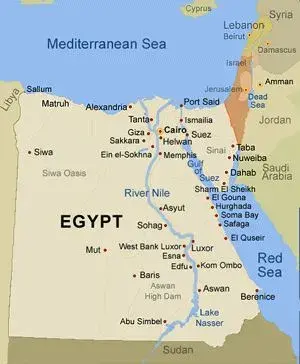
Egypt hosts 15 major commercial ports complemented by about 29 specialized ports, which include facilities for tourism, petroleum, mining, and fishing.
This robust Egypt sea port list underlines the country’s capacity to serve trade across the Mediterranean and Red Sea, offering diverse gateways for bulk, container, and specialized cargo flows.
Top Egypt Sea Port List : Key Facts Every Traders Must Know

Here is a detailed table highlighting each Egypt sea port name , its location, cargo types, and challenges.
Port Name | Location | Annual Capacity | Main Cargo Types | Facilities & Logistics | Key Operators | Challenges |
Alexandria Port | Alexandria (Mediterranean) | ~60% of Egypt’s trade | Containers, bulk cargo, grains, general cargo | Container terminals, customs, logistics centers | Maersk, MSC, CMA CGM | Congestion, limited expansion |
El-Dekheila Port | West of Alexandria | ~20 million tons | Bulk cargo, iron, steel, containers | Deep-water berths, multipurpose terminals | MSC, COSCO | Infrastructure aging |
Damietta Port | Mediterranean, East of Nile | ~25 million tons | Containers, grains, timber, bulk cargo | Large container terminal, modern logistics | CMA CGM, Evergreen, COSCO | Competition with Port Said |
Port Said Port | North entrance of Suez Canal | ~15 million tons | Containers, general cargo | Transit hub, free zone, customs clearance | Maersk, Hapag-Lloyd, MSC | Congestion, outdated facilities |
East Port Said | Eastern side of Suez Canal | ~3.5 million TEUs | Containers | State-of-the-art container terminals, logistics zones | Maersk, CMA CGM, COSCO | Expansion projects ongoing |
Arish Port | North Sinai | Small, under expansion | Bulk cargo, building materials | Limited facilities | Local operators | Security issues, weak global links |
Suez Port | Southern entrance of the Suez Canal | ~10 million tons | Oil, petroleum, bulk cargo, containers | Oil terminals, logistics hubs | Tanker operators, bulk carriers | Geopolitical risks, old infrastructure |
Petroleum Dock | Suez Region | Specialized | Crude oil, petroleum products | Dedicated petroleum terminals | Oil tanker operators | Safety rules, environmental concerns |
Adabiya Port | Gulf of Suez | ~6 million tons | Bulk cargo, grains, fertilizers, general cargo | Multipurpose terminals, warehouses | Regional shipping lines | Limited modernization, congestion risk |
Sokhna Port | Gulf of Suez (Red Sea) | ~750,000 TEUs | Containers, general cargo, bulk cargo | Modern multipurpose hub, SC Zone logistics zone | DP World, CMA CGM, COSCO | Infrastructure under pressure |
Sea Ports Near Egypt
Compared to the list of ports in the world , Egypt holds a unique position thanks to its dual access to the Mediterranean and the Red Sea. The Egypt sea port list is not only strong on its own but also strategically surrounded by important regional hubs. To the east, the Port of Jeddah in Saudi Arabia connects Egypt to the Arabian Peninsula and Asian markets. To the north, Greece’s Port of Piraeus and Turkey’s Port of Mersin provide direct access to European trade. On the southern side, Port Sudan on the Red Sea acts as a vital gateway to East Africa. This network of nearby ports enhances Egypt’s position as a bridge between continents
let’s explore the 5 Advantages of Sea Transport for Egyptian Importers and Exporters that make it the backbone of international trade
Most Popular Sea Port Carriers in Egypt
The Egypt sea port list is served by a wide network of international shipping carriers that make trade more accessible and efficient. Leading companies such as MSC, Maersk, CMA CGM, and COSCO provide frequent services through major ports like Sokhna, Alexandria, and Port Said. These carriers are trusted for their large fleets, global connections, and reliable transit times, helping Egyptian traders link smoothly with suppliers and buyers around the world.
Why Choose ACS Logistics Co. for Sea Freight in Egypt
At ACS Logistics Co., we don’t just move cargo, we connect you to global trade through Egypt’s most important sea ports. Whether you’re shipping containers via Alexandria, bulk cargo through Damietta, or using Sokhna for fast SC Zone access, our expert team ensures smooth, cost-effective, and reliable sea freight solutions. With trusted partnerships with top carriers and deep knowledge of the Egypt sea port list , we make your imports and exports easier than ever.
Request your free sea freight quote today and start shipping smarter!
FAQ
How does Abu Qir Port fit into the Egypt sea port list ?
Abu Qir Port, located east of Alexandria, is a smaller port mainly used for fishing activities, naval purposes, and some limited cargo handling. While it’s not as large as Alexandria Port, it plays a strategic role on the northern coast.
Which Egyptian port is most suitable for exporters of agricultural products?
Damietta Port is highly preferred for grain and timber exports due to its advanced container terminals and logistics facilities, making it a hub for agricultural cargo.
How do shipping companies choose between Alexandria Port and El-Dekheila Port?
Shipping lines such as MSC and COSCO use El-Dekheila Port when Alexandria Port faces congestion, as it has deeper berths and handles heavy bulk cargo like steel and iron.
Are Egypt’s ports connected to railway or highway networks?
Yes, most major ports such as Alexandria, Damietta, and Sokhna are linked with Egypt’s railway and highway system. This ensures smoother inland cargo movement from ports to industrial cities.
Are free zones available inside Egyptian ports?
Yes, ports like Port Said and East Port Said include free trade zones, offering customs advantages and encouraging foreign investment.
Egypt sea port list