The major sea routes in the world are the lifelines of global trade and for Egyptian exporters, they’re the key to faster deliveries, lower shipping costs, and wider market reach. Whether your cargo sails through the Suez Canal or connects via Asia and Europe, knowing these routes helps you plan smarter, avoid risks, and boost profits. Discover how mastering global sea routes can transform your logistics strategy and keep your business ahead in international shipping.

What Are the Major Sea Routes in the World?
A sea route (or maritime shipping route) is the navigational path used by vessels to transport cargo between ports. These routes are determined by geography, trade demand, weather conditions, and political safety.
3 main types of maritime routes:
Type of Route | Description | Global Examples | Relevance for Egypt |
Canals | Man-made waterways connecting two seas or oceans | Suez Canal, Panama Canal | The Suez Canal is Egypt’s strongest logistics asset, generating billions in transit revenue and reducing Asia–Europe travel time by 10+ days. |
Straits | Narrow natural passages between seas or oceans | Strait of Hormuz, Strait of Malacca, Strait of Gibraltar | Key for energy shipments; disruptions can raise fuel prices and affect Egyptian freight costs. |
Oceanic Routes | Long open-sea paths connecting continents | Trans-Pacific, Trans-Atlantic | Global container routes often feed into Suez-based networks. |
Regional Corridors | Shorter sea connections between neighboring markets | Mediterranean–Red Sea Corridor, Gulf Feeder Lines | Egypt benefits as a regional hub linking North Africa, East Africa, and the Gulf. |
When planning shipments, exporters should always check which route their cargo will follow, especially for cost-sensitive or time-critical goods. To plan your shipments more accurately, it’s also important to understand how long sea freight shipping takes, depending on route and destination.
→ Read more: How long does sea freight shipping take
10 Major Sea Routes in the World and Egypt’s Maritime Advantage
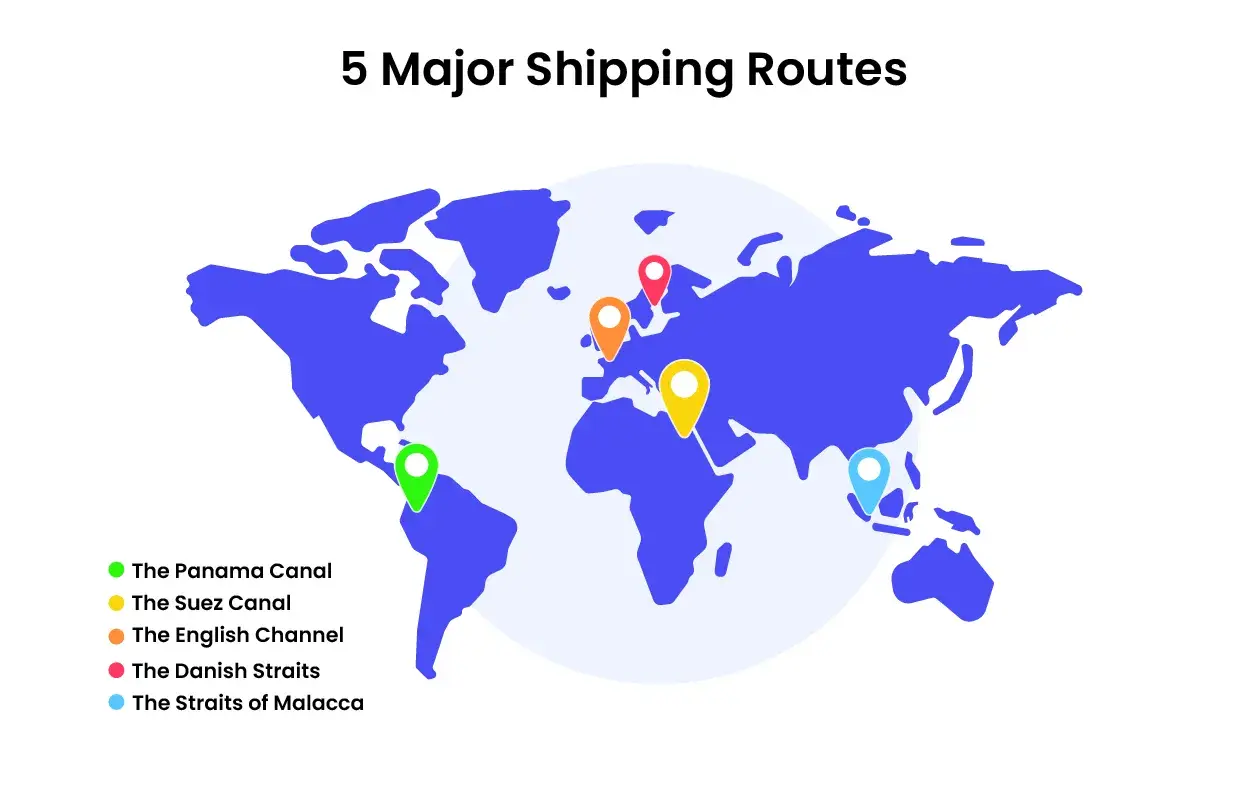
These ten major sea routes form the foundation of international shipping and almost all of them connect directly or indirectly with Egyptian trade.“The following table summarizes the major sea routes of the world , their cargo types, and their relevance to Egyptian trade.
Route | Region | Main Cargo | Egyptian Relevance |
Suez Canal (Egypt) | Mediterranean ↔ Red Sea | Containers, Oil, Gas | Egypt’s top national asset shortens–Asia-Europe distance by 7–10 days. |
Panama Canal | Atlantic ↔ Pacific | Manufactured Goods | Impacts ship schedules that may link to Mediterranean hubs. |
Strait of Hormuz | Gulf ↔ Indian Ocean | Crude Oil, Gas | Affects energy prices and Egyptian import costs. |
Strait of Malacca | Indian Ocean ↔ South China Sea | Consumer Goods, Electronics | Main Asia–Europe route connecting to Suez. |
Cape of Good Hope Route | Around South Africa | Bulk Cargo, Oil | Alternative when Suez Canal faces disruption. |
North Atlantic Route | Europe ↔ North America | Machinery, Vehicles | Egypt trades via European hubs connecting through this route. |
Trans-Pacific Route | Asia ↔ US West Coast | Electronics, Apparel | Influences global container availability and rates. |
English Channel / Dover Strait | UK ↔ Europe | Industrial Goods | Key for European distribution chains connected to Egypt. |
Strait of Gibraltar | Mediterranean ↔ Atlantic | Oil, General Cargo | Important for vessels entering or leaving the Mediterranean. |
Turkish Straits (Bosphorus) | Black Sea ↔ Mediterranean | Grain, Oil | Affects regional grain flow, impacting Egypt’s food imports. |
These types of maritime routes form the structure of major shipping routes of the world, influencing how Egyptian exports reach markets in Asia, Europe, and beyond.
Why Are These Sea Routes So Important?

Understanding Major sea routes in the world and their strategic importance helps companies make smarter and more profitable logistics decisions.
1. Reduced Transit Time & Cost
Shorter routes mean less fuel, faster delivery, and lower freight charges.
Example: Shipping from China to Europe through the Suez Canal saves up to 4,000 nautical miles compared to the Cape route.
2. Reliability & Risk Management
Every chokepoint, like the Suez Canal or Strait of Hormuz, carries risk. Weather, maintenance, or political tension can cause days of delay. Egyptian exporters should monitor Suez Canal Authority (SCA) updates and plan contingencies.
3. Global Trade Stability
Nearly 12% of global trade passes through the Suez Canal. Any disruption raises shipping rates worldwide, impacting Egyptian importers who rely on affordable logistics.
4. Strategic Leverage for Egypt
Operating one of the world’s most important canals gives Egypt economic and geopolitical influence. Revenue from the Suez Canal exceeds $9 billion annually, supporting Egypt’s economy and trade infrastructure.
5. Environmental & Regulatory Compliance
As the IMO (International Maritime Organization) enforces new environmental standards (like low-sulfur fuel limits), route selection and vessel choice can affect costs. Egyptian shippers must align with green shipping trends to stay competitive. To safeguard your cargo against unexpected delays or route disruptions, marine insurance plays a key role in global trade security.
→ Learn more: What does marine cargo insurance cover
Strategic Chokepoints Along Major Sea Routes in the World and Global Vulnerabilities
What Are Maritime Chokepoints?
They’re narrow passages where huge trade volumes pass daily any disruption can ripple globally.
Chokepoint | Risk | Impact on Egypt |
Suez Canal | Accidents, maintenance, congestion | Direct delays, higher tolls, fuel surcharges |
Strait of Hormuz | Political tension | Raises global oil price → higher shipping costs |
Strait of Malacca | Piracy, congestion | May affect Asian trade via the Suez |
Panama Canal | Drought, capacity limits | Reduces ship availability globally, impacts rates |
Tip for Egyptian exporters: Include contingency clauses in your shipping contracts for route changes. This helps manage demurrage and delay costs. When a route becomes unavailable due to congestion or political events, carriers may announce a blank sailing or a skipped voyage that affects global schedules.
→ Discover more: Blank sailing in shipping.
Route Comparison: Suez Canal vs. Cape of Good Hope
Factor | Suez Canal Route | Cape of Good Hope Route |
Transit Time | ~22 days (China → Egypt) | ~33–35 days |
Fuel Cost | Moderate | +20–25% higher |
Carbon Emissions | Lower | Higher |
Impact on Egyptian Exporters | Faster, more cost-efficient | Delays can cause penalties & spoilage for perishables |
This comparison highlights why the Suez Canal remains one of the most important sea routes in the world, especially for Egyptian exporters. Beyond route selection, additional fees like fuel adjustments or handling surcharges also affect overall shipping costs.
→ Check our detailed guide: Ocean freight surcharges list
Regulations Behind Major Sea Routes in the World
IMO Regulations
The IMO (International Maritime Organization) sets safety and emission rules affecting shipping worldwide. Compliance ensures lower pollution and safer operations.
Egyptian logistics firms must ensure carriers meet these rules, especially vessels transiting the Mediterranean or Suez Canal. Using IMO-compliant carriers enhances credibility and environmental responsibility.
Incoterms 2020
Incoterms define who bears cost and risk during shipment.
- Under FOB (Free on Board), risk transfers once goods are loaded.
- Under CIF (Cost, Insurance & Freight), the seller covers costs up to the destination.
Tip: Egyptian exporters should clarify who pays for additional costs if rerouting is required due to Suez congestion or security issues.
Local Regulations
Stay informed with updates from:
- Suez Canal Authority (SCA) for tolls and convoy schedules.
- Egyptian Ministry of Transport for port regulations.
- Port Authorities (Alexandria, Damietta, Port Said) for local fees and handling updates.
Current Trends and Future Developments in Maritime Trade
Emerging Routes: New trade corridors are transforming the network of major sea routes in the world, influencing global logistics and Egypt’s strategic role.
- Northern Sea Route (Arctic): Shortens Asia-Europe distance but remains seasonal due to ice conditions.
- African Coastal Corridors: Upgraded ports along East Africa could enhance connections with Egyptian ports.
- Suez Canal Economic Zone (SCZone): Expanding smart logistics and industrial zones to strengthen Egypt’s position as a key hub on global sea routes.
Sustainability : The future of shipping is green
- New low-carbon fuels (LNG, methanol, hydrogen) are reshaping route economics.
- Eco-slow steaming” reduces emissions but extends voyage time.
- Egyptian exporters should discuss sustainability strategies with freight forwarders to align with global trade partners.
Smart Logistics Strategy for Egyptian Exporters & Importers
- Map Your Routes — Egyptian exporters who understand major shipping routes of the world can plan better, cut costs, and improve delivery performance.
- Plan for Disruptions — Always have a backup route or carrier in your logistics plan.
- Use Digital Tracking Tools — Request real-time tracking and notifications from your freight partner.
- Align Contracts with Route Risks — Add clauses for delays or rerouting in Incoterms agreements.
- Stay Informed — Follow SCA updates, port bulletins, and maritime news daily.
- Optimize Inland Logistics — Synchronize port arrivals with truck/rail transport from Alexandria, Damietta, or Port Said to avoid demurrage.
Partnering with a professional freight forwarder in Egypt helps you navigate these complexities confidently, saving cost and time while ensuring compliance. Choosing efficient logistics partners can also help you find the cheapest way to ship heavy items internationally, while maintaining delivery reliability.
→ Explore tips: Cheapest way to ship heavy items internationally.
Expand Your Global Reach with Our Ocean Freight Services
The major sea routes in the world connect Egypt directly to international trade opportunities from Asia to Europe and beyond. With our professional ocean freight services , your shipments move smoothly through the world’s busiest routes, including the Suez Canal, ensuring faster transit, reliable delivery, and full compliance with global maritime standards.
Whether you’re exporting Egyptian products or importing vital goods, we help you minimize costs, manage risks, and stay competitive with tailored sea freight solutions designed for your business needs.
Ready to optimize your shipping through the world’s major sea routes?
Request a Shipping Quote now and start shipping smarter!
FAQs
How many major sea routes are there in the world?
There are around 10 globally recognized major sea routes, including the Suez Canal, Panama Canal, and Straits of Hormuz and Malacca.
What is the most important sea route in the world?
The Suez Canal connecting Europe, Asia, and Africa is often considered the most vital, handling nearly 12% of global trade.
How do sea routes impact Egyptian trade?
They determine shipping time, freight cost, and global competitiveness. Any disruption directly affects Egypt’s imports, exports, and foreign trade revenue.
How can digital tools improve route management?
By tracking vessels, forecasting delays, and suggesting cost-effective alternatives through AI and big data analytics.
10 Major Sea Routes in the World | Key Chokepoints & Risks